
Blind Mouths
The Shield of Bronze Borne Against the Forces of Night

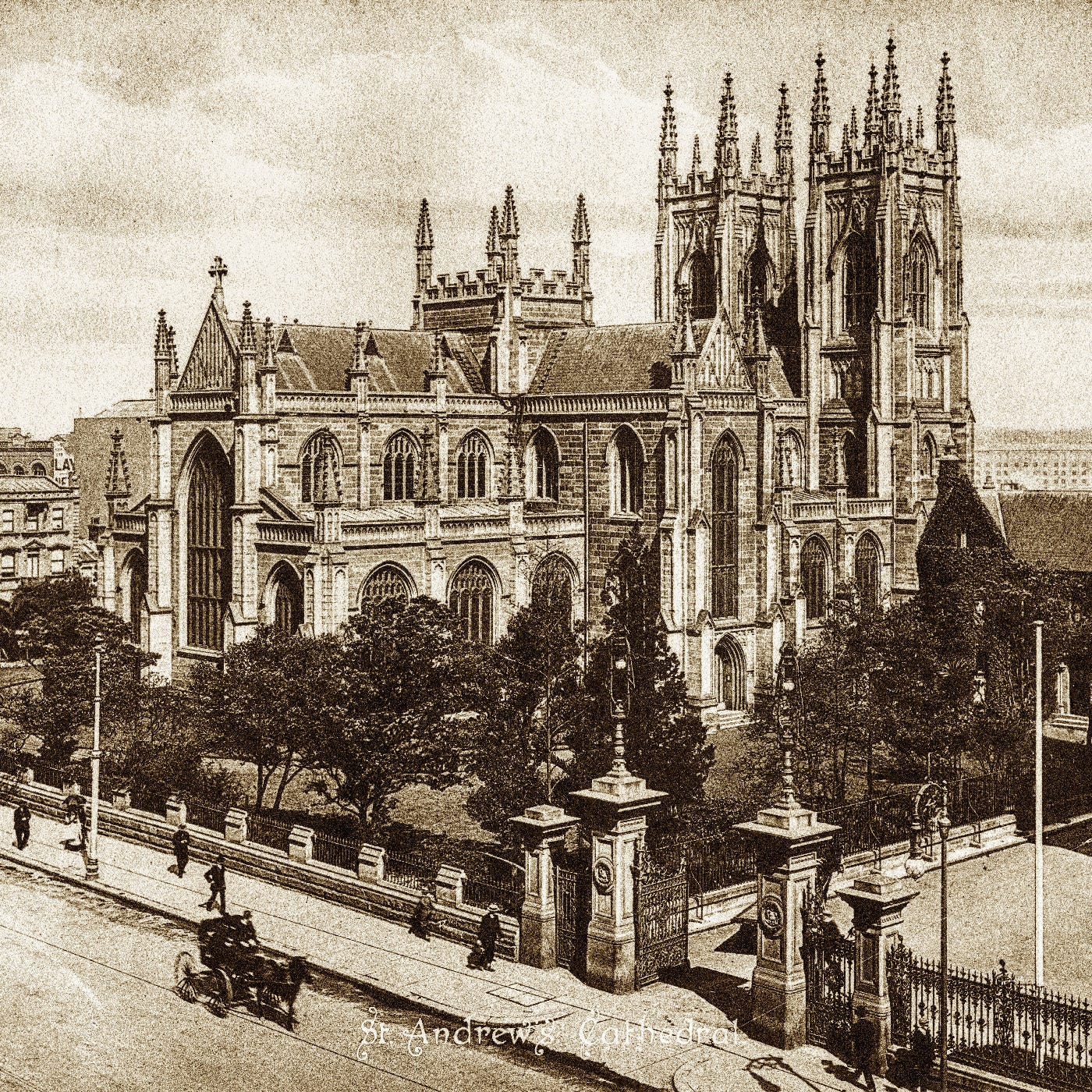
I locked the gates. The heavy iron ran along the rails and crashed together in the middle, and I lashed the bars with a weighty silver chain. Two massy keys I bore of metal twain. The gold one opes, the iron shuts amain. Beyond the bars the crowd began to thicken, and now and then between the homebound workers and the chicken eaters I saw a knotted brow and a white-black shawl, or brightly coloured flag in red, white, black and green, wrapped around young shoulders. I turned and walked back through the light, dead leaves. Huge sycamores, leprous in grey and green, flushed the square with shade but dropped their pods and foliage in heavy sweats throughout the summer. Shatter the leaves before the mellowing year. Above the canopy, the choppers had begun to circle, cutting up the sound as if the connection to the outside world was on a shaky line. Dragging my feet a little, I imagined the swishing of a soutane over the flagstones, and bent forward to walk like an angry prior into the belly of Emile’s Lourdes or Victor’s Notre Dame. The peaked arch windows, portioned by iron bars into little squares, looked down from the dull grey sandstone of the church facade as I came towards the door. I pulled and turned the clumsy iron ring to open the door, shuffled around and closed it behind me, peering through the shrinking gap to see if the crowd had started to gather. There were pockets of them up around the light-rail station, milling in twos and threes and tens and setting up small tables to shift their little pamphlets and to sell scarves to the others, who would be on their way from work if they worked and would have to walk past them to get to the demonstration. Behind me opened the narthex into the long nave, transepted some fifty metres away by the arms of the cruciform structure. I checked to make sure the door was fastened and turned to walk between the rows of chairs and up towards the altar. The nave was flanked by huge fluted Corinthians, piering more rows of large peaked arches. I had been once at Canterbury, whose perpendicular gothic had been the pattern for Blacket when he took over from Broughton and Hume in the church’s design, themselves having taken over from Governor Macquarie and Greenway, transported for forgery in 1812. The square tiles sent out long echoes through the aisles as I came to the apse, shading the church with a tremor of modest nobility. Blacket had fit centuries into this small plot of land, finding somehow in the local soil the deep roots of Old Europe. From beneath the door, more sounds rippled in, of voices and the shuffled feet conveying the gathering masses. I turned at the end of the nave and walked towards the staircase beside the altar. Like Rouen or Cologne, St Andrews was given two campaniles, absent the fanfare of Reims’ open towers or St Giles’ yawning belfry, but with its own small splendour in the blind tracery of the brown-grey outer walls. I walked up the stairway, narrow, dark and cold despite the heat outside. As I came to the first room in the tower, I walked over to the window. Through the dirty glass I saw them pour into the square, with their flags and placards and their headscarves and bikes and prams and their drums. All here for the great uncoupling; the softening of the grout. Police had formed a line around the perimeter, preventing the pressing numbers of the misled from reaching the heart of the square. The speakers began, and from the balcony of the ugly, civic, Roman building, they shouted about violence, about war, about slaughter and democracy. Blind mouths. I recognised the politicians and the clerics, and heard them all proclaim the land belonged to the “first” people. People who got up and moved at the first tremblings of the squall, who put down shallow roots and never laid the merest stone. Blind mouths, that scarce themselves know how to hold a sheep-hook. They talked of the dead and dying, and fulminated in the face of a man who had been brought here to mourn his own. The Jews of Israel, unbent before the hordes of night, together in a strong embrace as they buried their lost in the potter’s field. And these gathered, this procession of the insensate, passionate in rage and hatred, came here to stand against them. Hard in their hearts. Blind mouths! Their voices rang across the tiles and up the stairs, filling the church’s every corner with the ballast of the world-walker’s batteries. Around me I felt the stones begin to give, and ran from the room to the staircase, holding the walls of God’s house as I tumbled up and up, away from the massing teem of shadow groping the lower reaches and pooling higher with each waxing instant. I tripped and ran, taking the stairs two at a time until I came out into the belfry. I walked to the window, gaining my breath and holding the sill and looking down at the mass of people. In my despair at the numbers, a moment of glasslike clarity. There was a shield against the forces of night. A shield of bronze. I turned and looked at the small interface controlling the bells. Chimemaster Libertas AX. I walked towards it and pressed “peal” on the control board, setting forth the carillon. The simple climb and lilt of sounds, such as we use to call the congregation to prayer. Again I was the mad prior, clutching the rope and swinging from the clopper as the peals rolled out and beat back the shadow to its palest margin. Call the vales and bid them hither cast their bells and flow’rets of a thousand hues. The voices yielded, bowed before the mighty call of Hosannah and shrank into a muteness of abeyance. I could hear the speakers stumble, then nothing but the beauty of bright metal. Three, four minutes I let the cloches call, washing through old Blacket’s church and out through the crowded square. I looked at my watch. 6:24. They will wonder at the bells of 6:24! What is announced, what marked by such an ordinance? I wanted to know their faces in the brute confusion. I ran back down the stairs and came again to the first floor, approaching with wide eyes and ginger steps the dirty window. I looked down and saw the people watching, talking. Murmuring, maybe, between them, but still intent upon the pedestal and the sowers of simony upon it. Below, the police line had begun to yield, and now a fresh wave of the malignant was set upon the square. Young Muslim men smiled as they breached the sanctum. Sweat pricked my scalp and my palms, and I leaned against the frame for support. From below, somebody seemed to see my shape darken the window, and nudged their friend, pointing towards me. I backed away and went back up the stairs. This time they would not ignore me; could not stop their ears to the call of Ages, from Thrones and Dominations, rooting out the most untold and blemished reaches of the human heart. I came again to the belfry and lumbered to the Chimemaster, scrolling this time to “General Hymns” and choosing Bach’s “Jesu, Joy of Man’s Desiring,” a bright and rude cacophony from the church’s repertoire. Nothing could be heard above the mess of noise; singing, brilliant blade cut through the tawdry cape of the worldly and bristling the very soul. Again, I found the stairs and went down to the swart window, looking into the crowd for the faces of woe. Now, some turned like Reni portraits skywards, with the tortured faces of Poussin or Goya as the scales fell from their eyes. A din of fury went out along the crowd, like light catching a boat’s wake in soft water. Swollen with wind and the rank mist they draw, rot inwardly, and foul contagion spread. They looked again to my window, wondering at the routing of their dark designs. Saturn in his thousand faces turned up against his Maker, gnashing every set of his manifold teeth in unkempt rage. I unfastened the window, the better to hear their impotent curdling, and pushed my head out into the evening air. A cry went up, and to their hundred imprecations I returned my widest smile. A knight valiant, lion rampant, horsebound wielder of stave against the dragon, I let light’s corona halo my head and body and saw above the buildings the retreating millions of Correggio’s angels beaming down upon St Andrew’s. I closed the window and swayed back through the door, dancing on light feet around the staircase and floating into the uppermost room of the tower. I turned off the bells to hear the folding of the heinous ranks below. But the voices continued, and I could hear the very worst of them, full of passionate intensity, calling for the masses to move out and march through town, warlike in formation, bringing the night to the least corner of the city. I looked out towards the station and saw small, red flags aloft in the darkening wind. People began to move towards the road. I had wanted to drown them in glory, but had only moved them to walk beneath their banners. I saw, as they dispersed from the square, men bending in prayer, faced East, towards other lands. Despairing, I raised my own prayer to the true God, arraying like Job or Jeremiah the itinerary of my thousand sins and failures, inwrought figures dim. As I communed, I looked down to the far margin of the crowd. The words of devotion hung limp upon my lips as before my eyes advanced the Hosts of Heaven. Hundreds of men and women, in dark armour, strode in lines upon the ranks of infamy. Now infantry, now cavalry, bearers of the cross through heathen lands, they bent the short sword and poured the fiery pitch on the godless. In tens they held and bound the incorrigible, troubling the ribs and bowing them against the stones. Pull down thy vanity. At the other end, a second line of soldiers held the crowds, that they may be vanquished whole and summary. Some of the disconsolate cowards fled from the flank and poured into the streets below. The praying men were tackled, the line to Geryon cut by the lambent blade. The victory was single. I turned to the Chimemaster. This time it was not the thundering voice of the cloudy pillar, nor the trumpets of Jericho, but the clarion of the march triumphant, announcing His name to the usurpers of Jerusalem. “Trumpet Voluntary” on the controls. The bells rang out, shining each shout and blow into the voice and hand of the Church Militant. Singing through the streets and buildings, they brought to their knees the faithful and the hardened hearts alike. Now the last of the wayward were milling in confusion, and hardly noticed as the infantry gathered into a single mass and charged against them, toppling the proud and setting all the rest to foot. I felt the wind rise from below, that which lifts from Hell to Earth to Heaven, wincing against the wet checks of the uncouth swain and blearing his ruddy eyes. I rose, and twitched my mantle blue. Hosannah in the highest. Hosannah in the highest.